Electric & hybrid propulsion
On electric power, efficiency is the propeller.
Eco*Star was developed with the Insean hydrodynamics institute for the electric era — because most electric-drive vendors sell motors, not efficiency. 115 electric and hybrid fitments are already documented in our database.
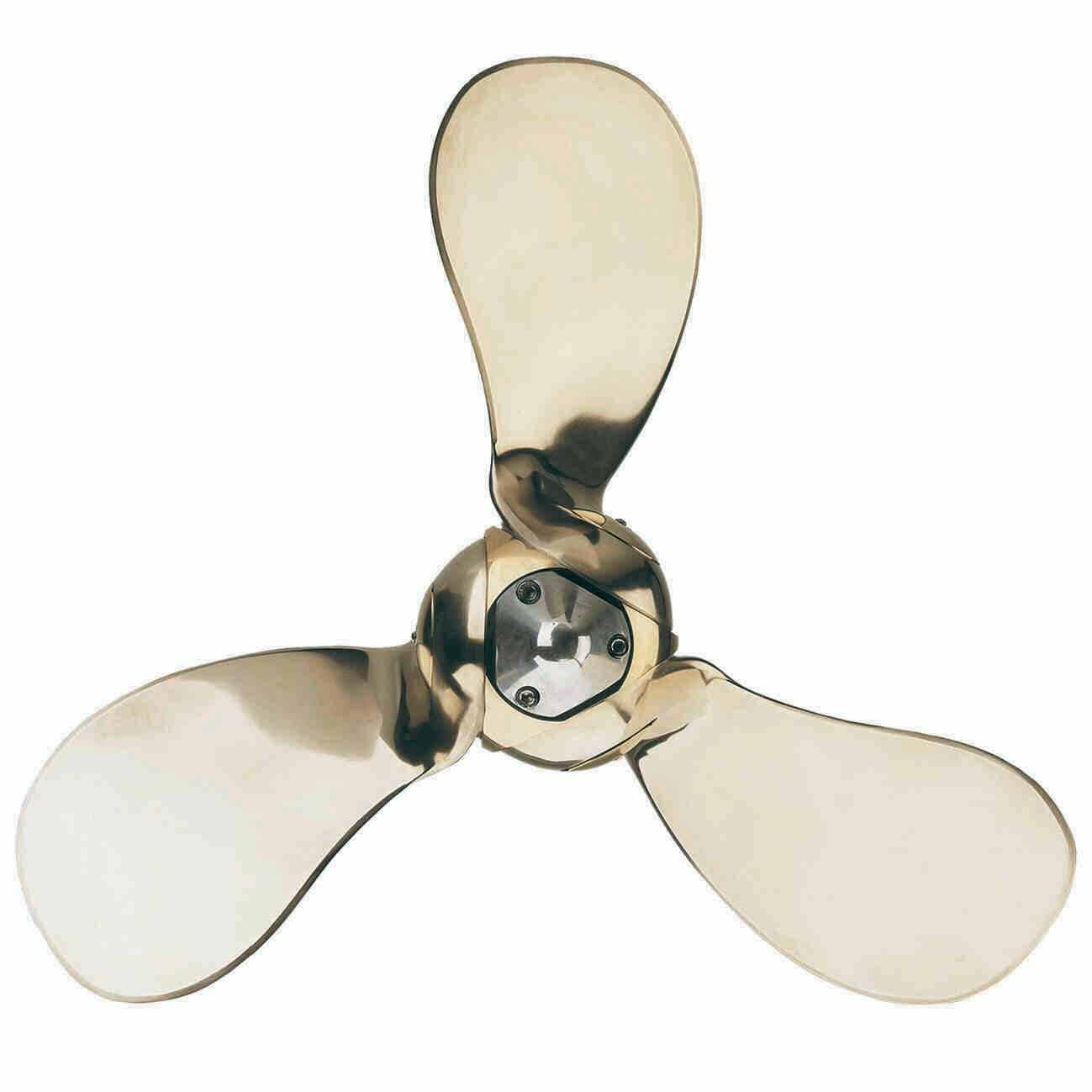
Why electric boats get the propeller wrong
An electric repower usually keeps the old fixed prop, or takes whatever the motor vendor bundles. Both choices ignore the two things that changed: the motor's torque curve is completely different, and the reduction ratio was probably chosen for the motor's happy RPM, not the boat's.
The result is range anxiety that was never about the battery. We have documented cases where correcting the propeller match recovered more range than a battery upgrade would have — at a fraction of the cost.
What Eco*Star does differently
Electric motors deliver constant torque from zero RPM — a completely different curve from a diesel — and only a propeller that continuously re-pitches itself can track that curve for maximum efficiency. Four years of development by Bruntons, Stone Marine Propulsion and Italy's INSEAN research institute produced exactly that: more boat speed from less energy, plus everything the standard Autoprop already does. Under sail, leave it free to windmill and the drive motor becomes a generator.
Documented examples
Forna 41 “Zig Zag 3”: 6.0 knots on 4 kW — the previous propeller managed 5.1 knots on 6 kW.
“The ability of the props to push the boat forward 1 knot faster than previously is very significant, and they also create a lot less cavitation in higher seas.”
Individual vessels, reported conditions — evidence of what a correct match can do, not a universal promise.
In the database
- Electric & hybrid fitments115
- Regeneration under sailup to 1 kW
- Drives seenOceanvolt · Torqeedo · E-Tech…
- VariantsShaft & saildrive
The electric case, plotted
Regeneration and the torque curve that changes everything
Regeneration under sail — watts back into the bank
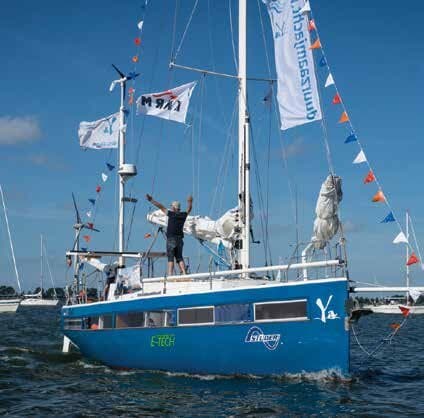
ModelledProven at sea: 50,000 miles of regeneration aboard ‘Ya’, the first yacht around the world without fossil fuels.
| Boat speed | Regeneration |
|---|---|
| 2 kn | 40 W |
| 3 kn | 95 W |
| 4 kn | 175 W |
| 5 kn | 280 W |
| 6 kn | 405 W |
| 7 kn | 555 W |
| 8 kn | 725 W |
| 9 kn | 900 W |
Why electric changes the propeller problem — torque vs revs
ModelledFull torque from zero revs (green) is a completely different animal to a diesel's rising curve (grey) — only a blade that re-pitches itself can stay matched to both.
| % of rated rpm | Electric torque | Diesel torque |
|---|---|---|
| 0% | 100% | 0% |
| 10% | 100% | 38% |
| 20% | 100% | 56% |
| 30% | 100% | 71% |
| 40% | 100% | 84% |
| 50% | 100% | 92% |
| 60% | 100% | 97% |
| 70% | 96% | 100% |
| 80% | 90% | 98% |
| 90% | 84% | 93% |
| 100% | 78% | 86% |
Proof at planetary scale
The first yacht around the world without fossil fuels ran two Eco*Stars.
The Dutch yacht ‘Ya’ circumnavigated on solar panels, wind and water generation alone — her final power source the pair of Autoprop Eco*Star propellers turning her wake into amp-hours. When the energy budget is the whole voyage, this is the propeller that gets chosen.
- up to 1 kW
- regenerated under sail
- 50,000 mi
- of regeneration proven aboard ‘Ya’
- up to 85%
- feathered drag reduction
- 4 years
- of R&D with INSEAN — the Hymar project
Also on Eco*Stars: Energy Observer, the zero-emission research vessel; the first all-electric fishing boat; canal-barge wing engines; and the Forna 41 Zig Zag 3diesel-to-electric conversion.
The range
Every Autoprop series, electrified
| Models | Diameters | Shafts |
|---|---|---|
| H5E · H20E · APSE | 380–510 mm (15–20″) | 20–35 mm (⅞–1½″) |
| H6E · H9E · H62E | 470–900 mm (19–35″) | 35–75 mm (1½–3″) |
Retrofittable to existing shafts and saildrive legs — it arrives assembled. Developed by Bruntons, sister company Stone Marine Propulsion and the Insean Research Institute, whose tank testing and mathematical modelling optimised the blade sections for electric torque curves.
Questions owners ask
Why does the propeller matter more on an electric boat?
Because the energy store is small. A diesel tank forgives an inefficient propeller with capacity; a battery doesn't. Every percent of propulsive efficiency converts directly into range — the propeller is the single biggest efficiency lever on an electric conversion.
Does Eco*Star regenerate under sail?
On suitable installations, yes — sailing with the motor off, the free-spinning propeller can drive the motor as a generator. Recovery depends on boat speed, the motor/controller's regeneration capability and the installation; we confirm the whole system, not just the prop.
My electric motor has an unusual reduction ratio. Is that a problem?
It's the most common problem we fix. Electric drives often ship with reduction ratios chosen for the motor, not the boat, leaving any propeller badly matched. Send us motor power, RPM and ratio — sizing around the real shaft speed is exactly what the Eco*Star programme was built for.
Can I keep my diesel and add electric later?
Hybrid installations are documented in our database. The self-pitching action suits hybrids especially well because the load profile changes between diesel and electric modes — the blades simply re-pitch.
Planning an electric conversion?
Send the motor spec, reduction ratio and your boat — we'll tell you what the propeller can and can't do for your range, before you spend anything.