Automatic shaft brake · hydraulic gearboxes
Engine off, shaft locked. Engine on, released. Automatically.
A propeller that keeps turning under sail is annoying, slow and hard on the gearbox — and hydraulic boxes can't lock their own shafts. Autolock's calliper-and-disc brake does it for them: totally automatic, reliable with every make of hydraulic transmission.
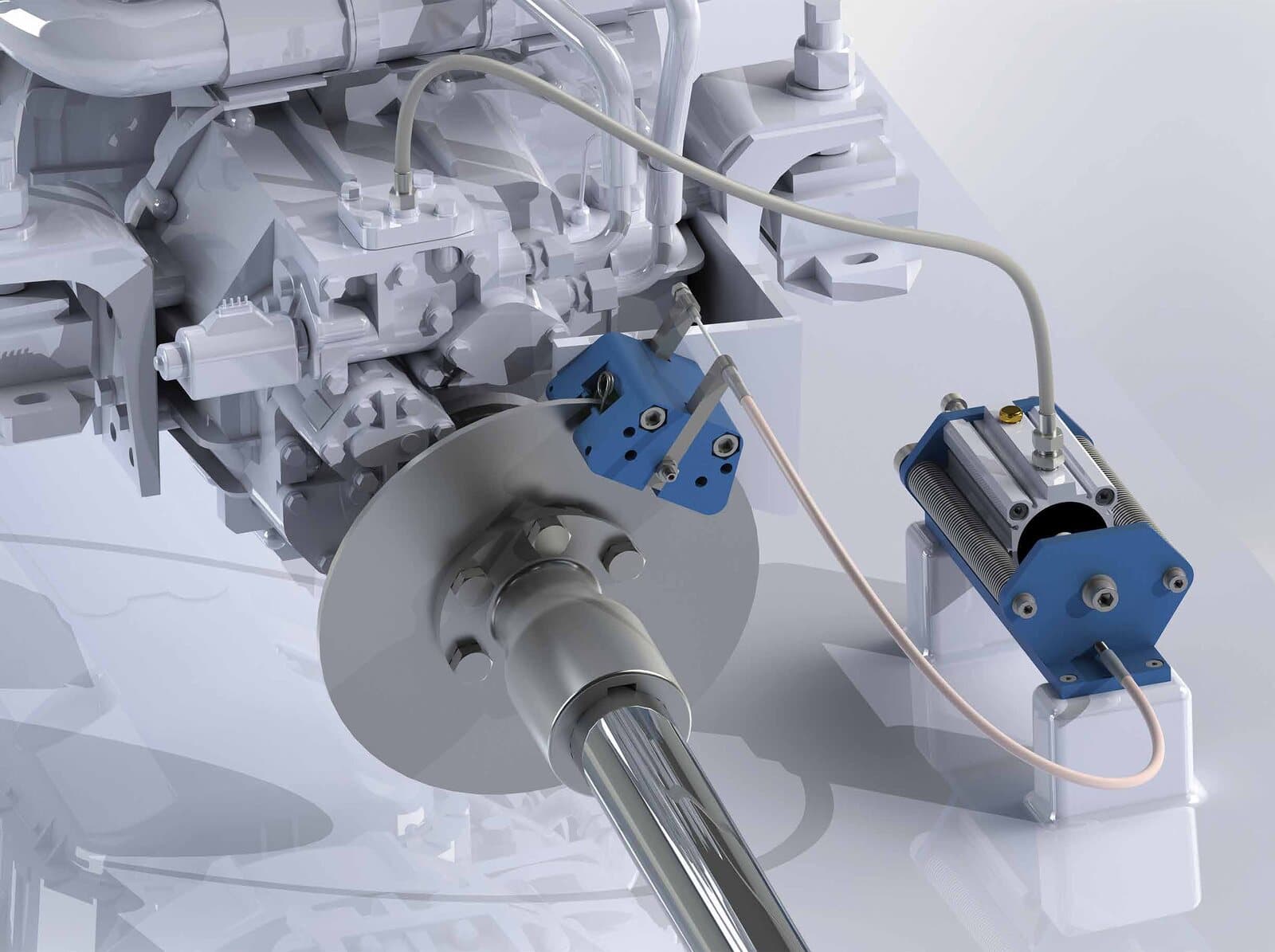
How it works
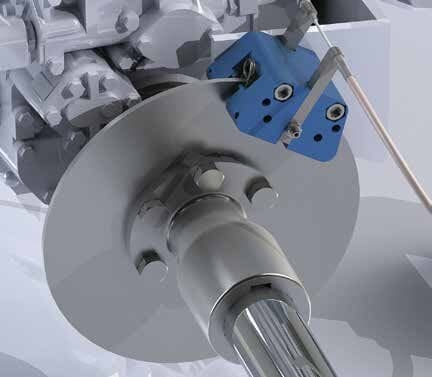
A 316 stainless disc mounts on the shaft coupling; a spring calliper grips it the moment drive stops. Start the engine and hydraulic gearbox pressure releases the brake instantly — the lock can never be engaged against a running engine, and the shaft can never freewheel with it off.
For feathering and folding propellers the stopped shaft is what lets blades feather or fold — which is why Autolock is the natural partner to an Autoprop or Varifold on a hydraulic box. A freewheeling shaft is really four problems in one — the constant whine below, the drivetrain wear, the added drag of a windmilling blade, and a low-drag propeller that can never do its job. Autolock ends all four at once.
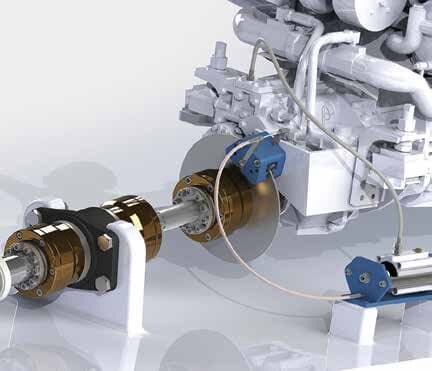
Discs run from 200 mm to 400 mm (8″–16″) with a standard 1 m actuation cable, adaptable to all makes of gearbox coupling including flexible couplings.
| Single calliper | Dual calliper | |
|---|---|---|
| Disc diameter | 10–14″ | 10–14″ |
| Holding torque | 340–390 Nm | 460–520 Nm |
| Disc material | 316 stainless steel, 8–16″ range | |
| Actuation | Automatic · standard 1 m cable | |
| Compatibility | All hydraulic gearboxes; all gearbox couplings including flexible; all feathering & folding propellers | |
Holding torque — single vs dual calliper
Measured316 stainless discs from 200–400 mm (8–16″); 10–14″ covers most cruising installations. We size the calliper from shaft, propeller and displacement.
| Configuration | Holding torque |
|---|---|
| Single calliper | 340–390 Nm |
| Dual calliper | 460–520 Nm |
Owners ask
Why does a hydraulic gearbox need a shaft brake?
Hydraulic boxes can't be locked by engaging gear with the engine off — there's no hydraulic pressure, so the shaft freewheels under sail. That's noise below, drivetrain wear, and for feathering and folding propellers a shaft that won't stay still long enough to feather or fold. Autolock holds it, automatically.
How automatic is 'automatic'?
Completely. The calliper grips the disc when the engine stops and releases the instant it starts — no cable to pull at the helm, no lever to forget with the engine in gear. There is nothing to remember, which is the whole point.
Will it work with my coupling and my prop?
Autolock adapts to all makes of gearbox coupling, including flexible couplings, and suits every make of feathering and folding propeller on a hydraulic transmission — Autoprop and Varifold naturally, and everyone else's too.
Single or dual calliper?
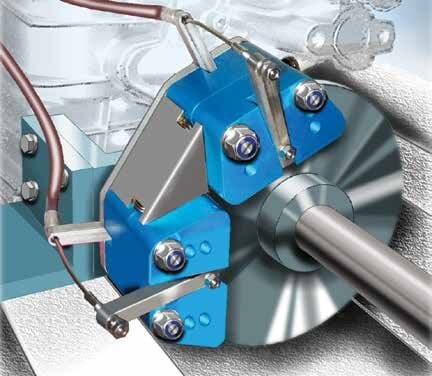
Both run 316 stainless discs from 10 to 14 inches. Single calliper holds 340–390 Nm — right for most cruising yachts. Dual calliper holds 460–520 Nm for bigger boats and bigger props. We size it from your shaft, prop and displacement.
The technical drawing
Locked and released, drawn working
Toggle the engine state to watch the spring apply and the oil pressure release — the whole automatic logic, and every part explained.
Interactive technical drawing · BA-AL-01
Autolock — spring-applied, pressure-released
316 stainless disc
Mounts on the shaft coupling — discs from 200 to 400 mm (8–16″), with 10–14″ covering most cruising installations. Stainless, so it lives happily in a bilge.
Add it to your propeller enquiry
Autolock is usually specified with a new propeller — mention the hydraulic gearbox in the Builder and we'll size the disc and calliper with the prop.